Knowing the signs you need a new roof can save New York homeowners thousands of dollars in interior damage, mold remediation, and emergency repairs. After more than two decades protecting Manhattan, Brooklyn, Queens, and the Bronx from harsh winters and humid summers, the team at TipTop Roofing NYC has compiled the most reliable warning indicators every property owner should know.
Your roof is the single most important defense system on your home. Yet most New Yorkers only think about it after a leak appears in the ceiling, by which point water has often been traveling through the structure for weeks. The good news? Roofs almost always tell you they are failing long before catastrophe strikes, you just have to know what to look for.
1. The Age of Your Roof – signs you need a new roof
Age is the single most reliable predictor of roof failure. A standard three-tab asphalt shingle roof installed properly in the New York metro area typically lasts 18 to 22 years. Architectural shingles can stretch to 25 or 30, while slate, copper, and tile may last a century. If your roof is approaching the upper end of its lifespan, replacement should be on your radar even if everything looks fine from the curb.
Pull your closing documents or ask the previous owner. If the roof was already installed when you purchased the home and you have been there a decade or more, the original underlayment is almost certainly degraded.
2. Curling, Buckling, or Cracked Shingles
Walk to the opposite side of the street and look up at the slopes that face the most sun, usually south and west. Healthy shingles lie completely flat. If you notice edges that curl upward, a wavy or rippled appearance, or shingles that look like they are climbing over each other, the asphalt has lost its flexibility.
In our NYC climate, the freeze-thaw cycle accelerates this dramatically. Water seeps under lifted edges, freezes overnight, expands, and pries the shingle further away from the deck. Once you see widespread curling across more than a third of any slope, spot repairs are no longer cost effective.
“If you can see daylight through your attic boards, water can get through too. That single observation prompts more emergency calls in our service area than any other.”
3. Compromised Roof Valleys and Chimneys
Valleys are the V-shaped channels where two roof planes meet, and they handle more water flow than any other part of your roof. Chimney flashing, the metal collar where masonry meets shingles, is the second most common failure point. Both areas are notoriously difficult to seal correctly and they are where roughly 70 percent of leaks originate.
What to look for:
- Rust streaks running down brick chimneys
- Missing or shifted flashing metal around skylights or vent pipes
- Granules or shingle pieces collected in the valley channel
- Visible tar patches from previous quick-fix repair attempts
4. Granules in the Gutters
The colored ceramic granules embedded in asphalt shingles do two critical jobs: they protect the asphalt from UV degradation and they add fire resistance. When granules wash off, the shingle underneath bakes in the sun and fails rapidly.
Check your gutters and the splash zone at the bottom of downspouts. A handful of granules is normal after a new installation, but heavy accumulation, bare patches on shingles visible from the ground, or downspouts that look like they are pouring out black sand all indicate a roof in the final third of its life.
5. Active Leaks and Interior Water Damage
This is the sign no one can ignore, and unfortunately the most expensive one to discover. Brown rings on ceilings, peeling paint at the top of exterior walls, sagging drywall, and a musty smell in the upper floors all point to water actively entering the building envelope.
Get into your attic with a flashlight on a sunny day. If you see pinpoints of light coming through the decking, daylight visible around the chimney chase, or any dark staining on the wood rafters, call a licensed roofer immediately. In an attic, every day of delay multiplies the repair scope.
NYC Climate: Why Local Conditions Matter
Roofs in the five boroughs face conditions you simply do not see in milder regions. Salt air from the harbor accelerates metal corrosion in Brooklyn and Queens waterfront properties. Coal-soot deposits from a century of industrial use still acidify rainwater on older Manhattan buildings. The annual swing from 95 degree summer rooftops to single-digit January nights stresses every fastener and sealant on the deck.
Add nor’easters that dump heavy wet snow, the occasional summer hurricane, and the punishing UV index from reflected glass on tall buildings, and you have a climate that demands a roof system specifically engineered for the region.
Insurance Considerations You Cannot Ignore
Most New York homeowner policies now include a roof age clause. Carriers may refuse to renew coverage on roofs older than 20 years, or shift you from replacement-cost to actual-cash-value coverage, which can leave you paying tens of thousands out of pocket after a storm. Documenting a proactive replacement before policy renewal is one of the smartest financial moves a homeowner can make.
Save every receipt, take dated photographs before and after the project, and request the manufacturer warranty paperwork. Some carriers offer premium discounts for impact-resistant Class 4 shingles, an upgrade we routinely recommend for exposed properties.
What to Do Next
If you noticed your roof in two or more of the descriptions above, schedule a no-cost professional inspection. A qualified roofer will photograph the entire surface, measure remaining shingle thickness, evaluate flashing integrity, and give you a written assessment of remaining lifespan. From there you can budget intelligently rather than reacting to an emergency.
TipTop Roofing NYC offers free, no-pressure inspections throughout Manhattan and the surrounding boroughs. Our licensed inspectors document everything with high-resolution photos so you see exactly what we see, and you receive a clear written report whether you choose to hire us or not.
Worried about your roof? Get a free expert inspection.
No-pressure assessment by licensed inspectors. Same-week appointments across all five boroughs.
Five Warning Signs at a Glance
If you spot two or more of these on your home, it is time to call a professional roofer.
Roof Age
Asphalt roofs over 18 years are nearing end-of-life in NYC climate.
Curling Shingles
Lifted edges and wavy patterns mean asphalt has lost flexibility.
Failed Flashing
Rust streaks at chimneys and valleys signal active water entry points.
Lost Granules
Black grit in gutters and downspouts means UV protection is gone.
Interior Leaks
Brown ceiling rings and attic daylight require immediate response.
“TipTop spotted granule loss and chimney flashing issues during their free inspection that two other companies completely missed. Their replacement crew finished our brownstone roof in three days and the new system has handled two nor’easters without a drop of water inside.”
Marcus D.
Park Slope Brownstone Owner, Brooklyn
Frequently Asked Questions
How long does a typical roof last in New York City?
Standard three-tab asphalt shingles last 18 to 22 years in our climate, while architectural shingles can reach 25 to 30 years. Slate, tile, and copper roofs commonly exceed 75 years when properly maintained. The freeze-thaw cycle and salt air in coastal neighborhoods can shave several years off these averages.
Can I just repair a few damaged sections instead of replacing?
Spot repairs make sense when damage is isolated and the roof has more than five years of life remaining. Once granule loss, curling, or leaks affect more than a third of the surface, replacement is almost always more cost-effective than chasing problems across an aging system.
Will my homeowners insurance pay for a new roof?
Insurance typically covers sudden storm damage, not gradual wear from age. However, documenting a hail event, fallen tree, or wind damage promptly with photos and a professional inspection report dramatically increases your chance of approval. Many NYC carriers also offer discounts for impact-resistant shingles.
How much does a new roof cost in NYC?
Pricing varies widely by borough access, building height, material choice, and existing deck condition. A straightforward residential asphalt replacement typically ranges from $9 to $15 per square foot installed, while flat membrane and slate systems run considerably higher. We provide written, itemized estimates at no charge.
How quickly can you respond to an active leak?
For active leaks during business hours, our emergency tarp crews typically arrive within 24 hours across Manhattan and the surrounding boroughs. We stabilize the roof, document the damage for your insurance, and schedule the permanent repair as quickly as weather allows.
Related Articles
More expert guidance from the TipTop Roofing NYC team.
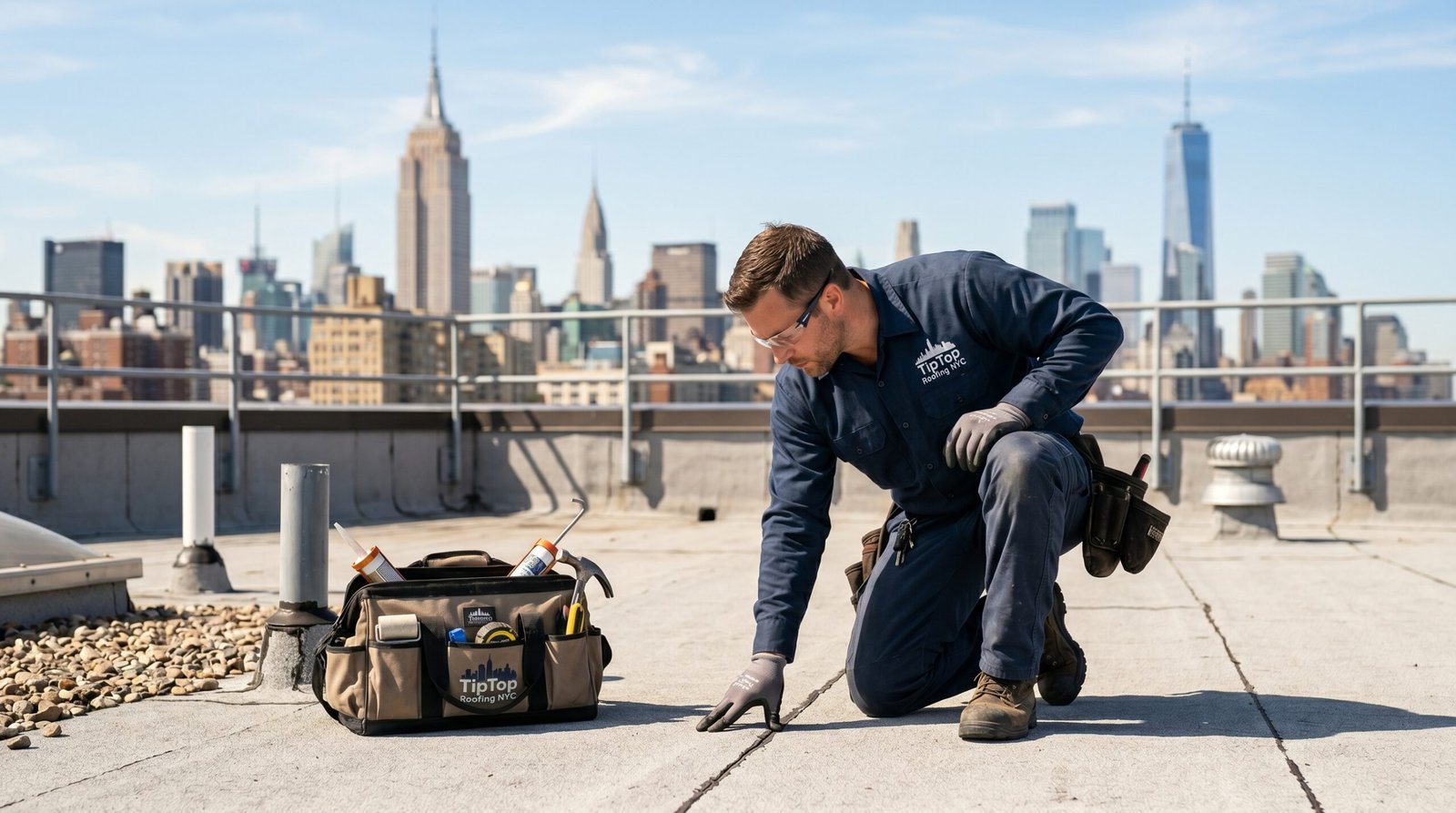
Flat Roof Care: A Manhattan Owner’s Seasonal Checklist
Learn the four annual tasks that double the lifespan of EPDM and TPO membrane roofs.
Read article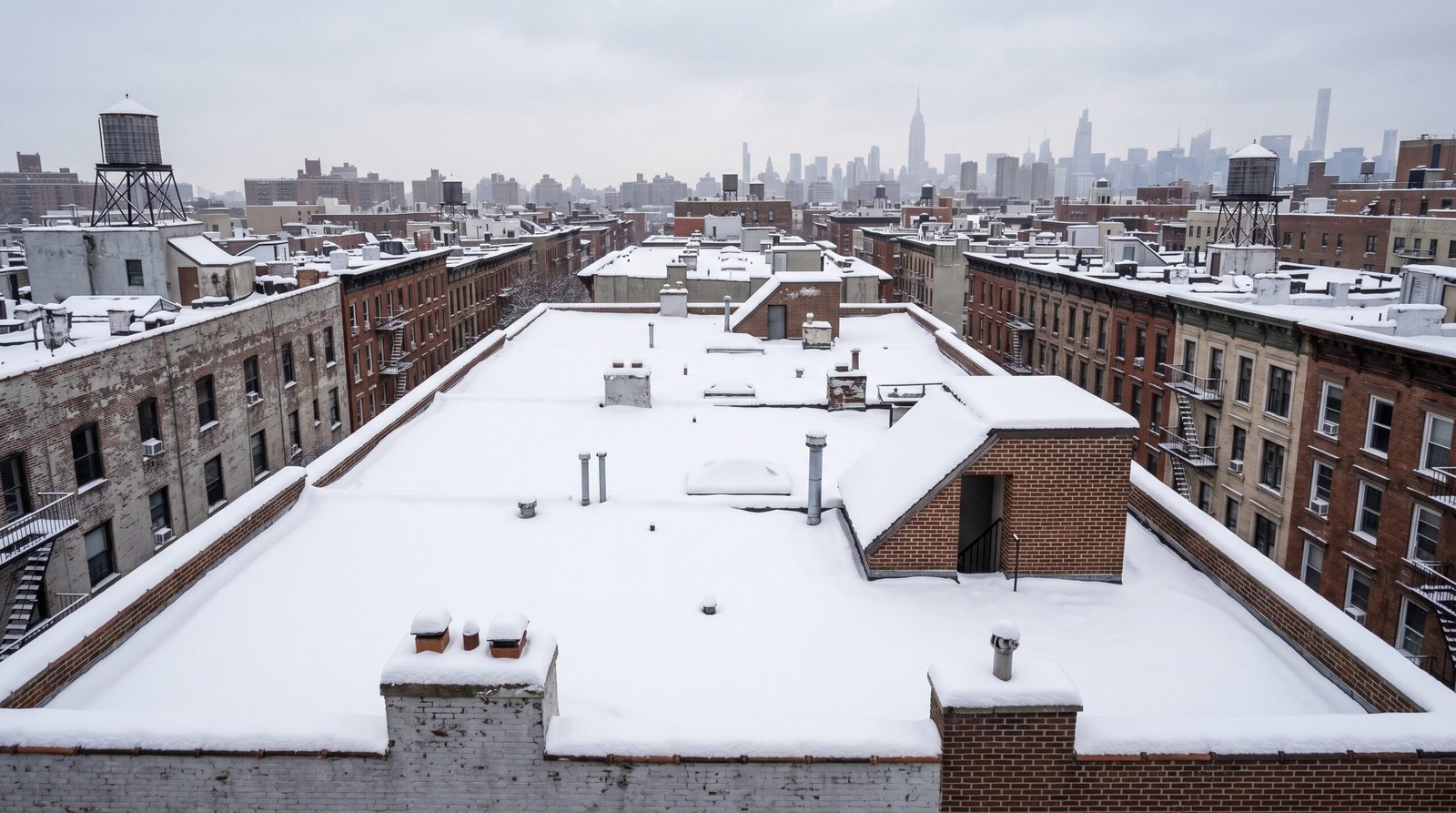
Ice Dams Explained: How NYC Winters Destroy Roofs from the Edge
The science behind ice dam formation and proven prevention strategies for older brownstones.
Read article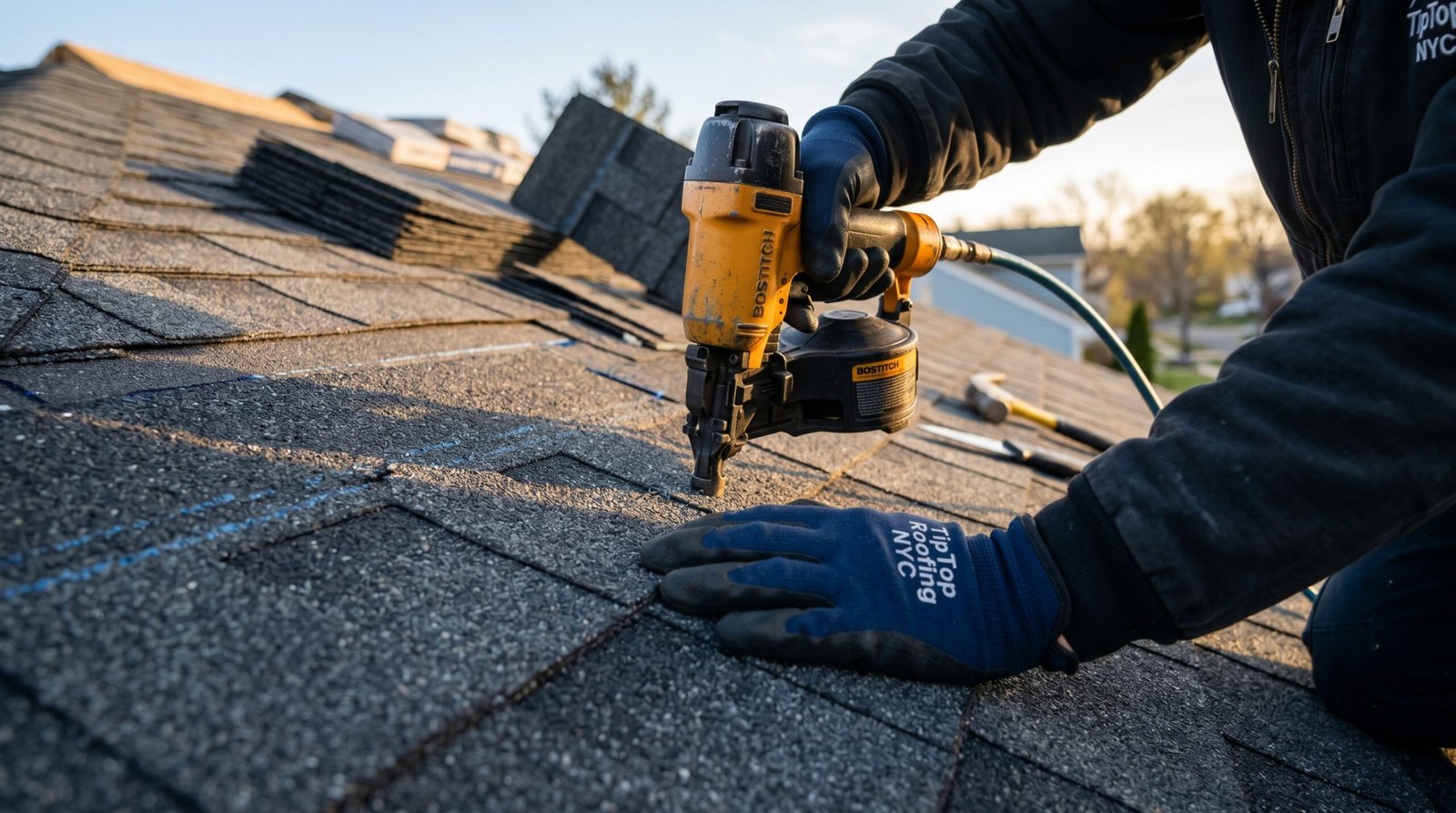
Asphalt vs Architectural vs Slate: Choosing the Right Roof
A side-by-side comparison of cost, lifespan, and curb appeal for every NYC home style.
Read articleSchedule Your Free Roof Inspection Today
Licensed, insured, and trusted by New Yorkers since 2001. Get a written assessment with photos, no obligation, no pressure.